Fun Littles

Fun and easy kids activities

Lemon Suds Eruptions

Aug 24, 2013111,663 views
Messy Play
Ages2–7 yrs
Prep10 min
Activity30 min
Leveleasy
MessHigh
Works for1:1 · Small group · Class

Add baking soda and citric acid to bowls of colored soapy water to make long-lasting, cold, fluffy foam eruptions. A vinegar-free science experiment that turns into sensory play.

⚠️ Safety first

  • Citric acid stings eyes and cuts — use small amounts, keep hands away from eyes, and wash hands after.
  • Soapy foam is not for eating; supervise toddlers closely.
  • Rinse hands well afterward; a reader warns that citrus juice on skin plus sunlight can cause skin burns.

Steps

  1. Mix clear hand soap and warm water in small bowls.

  2. Add a few drops of food color to each bowl.

  3. Set the bowls inside a deep sensory tub.

  4. Add scoops of baking soda to each bowl and mix.

  5. Add scoops of citric acid and watch the foam rise.

  6. Stir and stir — the more you mix, the bigger the foam.

  7. Add more food colors to brighten the foam.

  8. Dump all the bowls into the tub and feel the cold foam.

Tips

  • The more the kids stir the concoction, the bigger the foam and the more dramatic the result.from the author
  • The eruptions are long lasting and take a long time to fall flat, so there's plenty of time to play.from the author
  • The foam is cold to touch — kids got a big kick out of the chillness.from the author
  • Bring in toy animals for extended pretend play.from the author
  • This "recipe" is pretty forgiving — use the amounts as a starting point.from the author
  • Soap and lemon juice makes a ton of foam.from readers

Make it your own

  • Leave out the colors to make a natural homemade cleaner from baking soda, soap and citric acid or lemon juice.
  • Pretend the colored foam is cupcakes.
  • Try the baking soda and vinegar version and compare.

Questions readers asked

Should I use baking soda or baking powder?

Baking soda — it's bicarbonate of soda.

Which makes more foam, vinegar or citric acid?

The author says soap with lemon juice makes a ton of foam; the post notes citric acid gives bigger foam than lemon juice.

Is this really a science experiment?

Yes. It's a simple acid-base reaction (citric acid + sodium bicarbonate) that releases carbon dioxide, which whips the soap into foam. It's endothermic, so the foam feels cold.
The story behind it

By TurkeyMom · August 2013
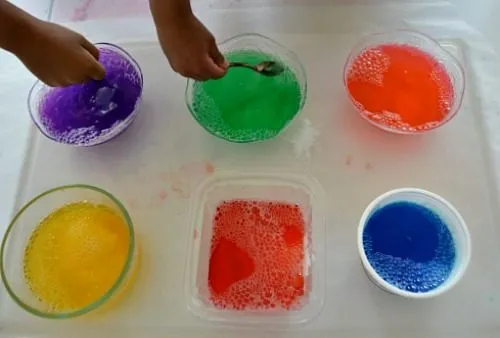
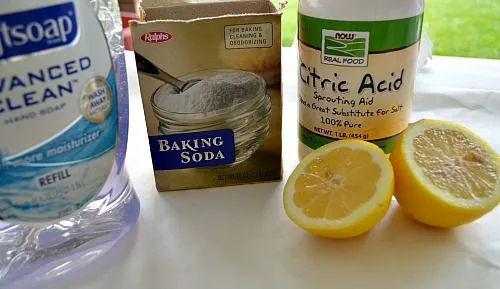
materials needed for the experiment
Today we share a vinegar-free science experiment that is a learning activity, sensory activity and fine motor activity all rolled into one. Here are the supplies you will need.
1 / 10

Lemon Suds Eruptions: the original post

One of the best ways to inculcate a love for science in kids is by doing hands on activities. In this case we are doing a fun hands on science experiment that has so many aspects built into it that this turned into one of the most enriching and stimulating activities we have ever done. This one science experiment is a learning activity, sensory activity, fine motor activity all rolled into one. To top it all at the end of the science experiment you will have created a homemade all natural cleaning agent! How cool is that? We have done a few science experiments in the past, our recent red cabbage experiment and a similar baking soda and vinegar activity . Today we share another recipe for the same fun colorful explosions by switching the acid. We are again showing a vinegar free science experiment The supplies you will need.

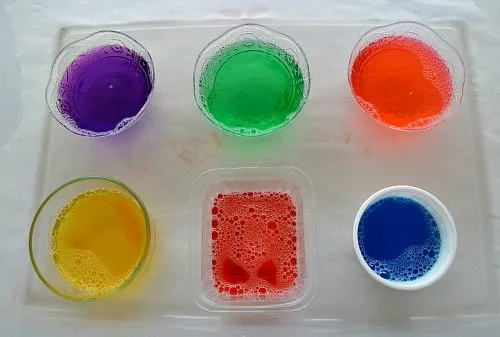
materials needed for the experiment I set our small containers with clear hand soap and warm water mixed in to create sudsy water. I added few drops of food colors to make the eruptions interesting.. After setting out all the colorful bowls of sudsy water inside a deep sensory tub we usually use for all our sensory activities, I set our baking soda and citric acid.

colored soap water Please note that you can eliminate citric acid and use lemon juice instead but the size of the foam and eruptions will be less dramatic. Citric acid can be easily purchased online or from the stores. They are usually in the canning aisle. It is a safe, naturally occurring weak acid present in lemons,limes, oranges, tangerines and many more. Next : the kids added scoops of baking soda to each bowl of sudsy water

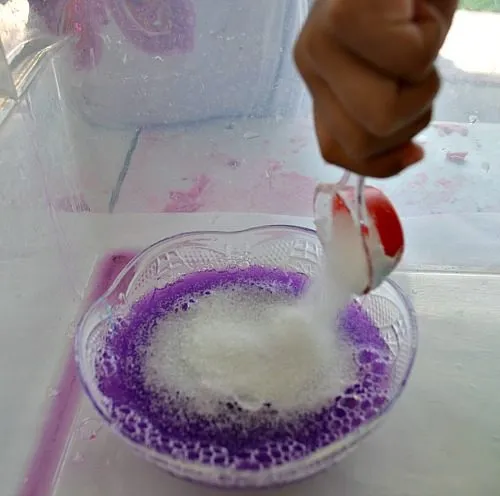
adding baking soda to colored soap water Ooh mixing them was so fun. It actually resulted in a fun gooey product. Now that’s done I surprised the kids by handing over the salt like substance ( instead of our usual vinegar). I told then that we will be adding this to create super foam and fun eruptions.. They couldn’t wait! The kids very eagerly added scoops of citric acid and waited.

add citric acid As soon as the citric acid/lemon juice hits the baking soda sudsy water combination it immediately creates a very light, airy, fluffy foam which is TOO cool (literally) for words.

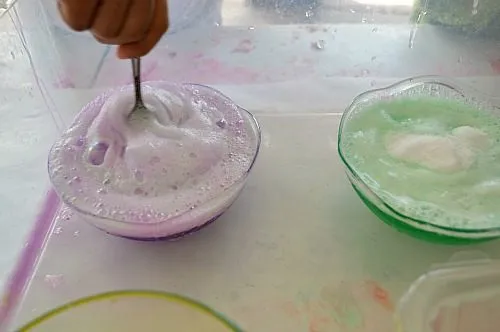
fizzes The best part of this science experiment : the eruptions are LONG LASTING. I set our small spoons for mixing. The more the kids mixed in the citric acid, the lighter, fluffier and bigger the foam they got.

fizzy foam Since we ended with paler eruptions, the kids suggested that we add more food colors. line up pale colored fizzes The kids added food colors to the sudsy eruptions and most of the time DID NOT match the colors and created multi colored sudsy fizzies.

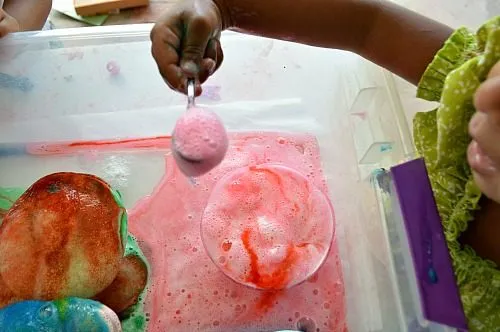
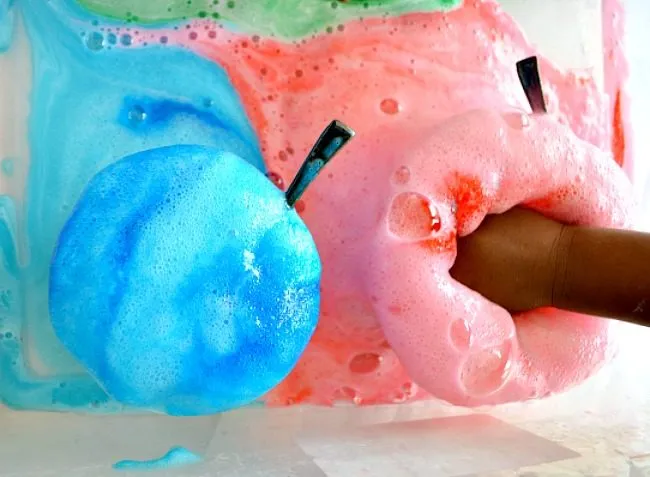
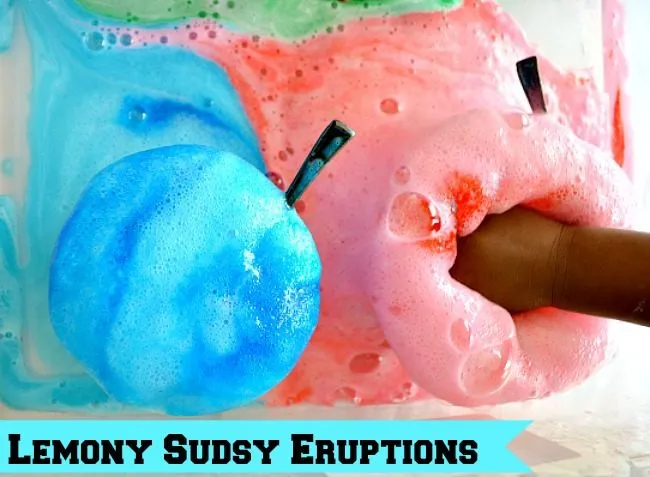
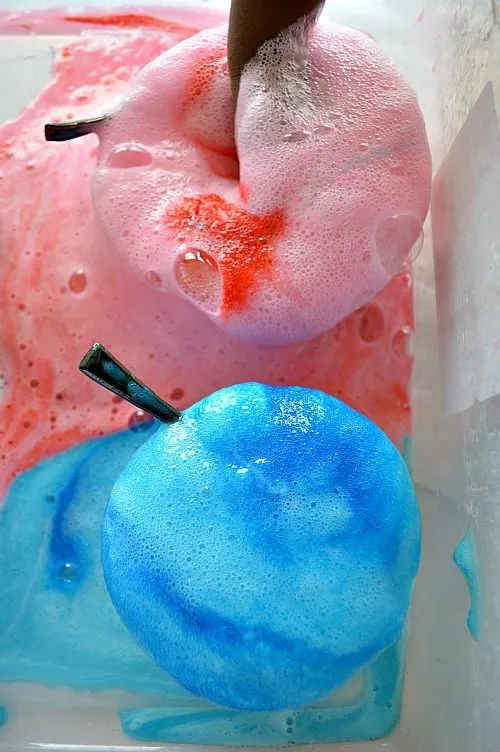
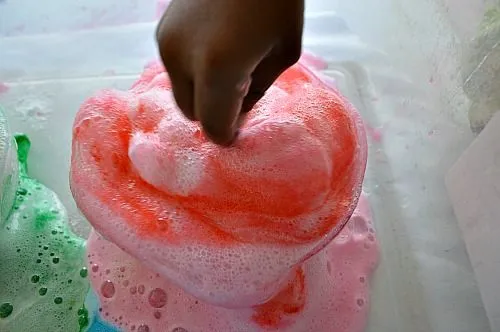
add more colors My older was particularly excited with the green and red combination! mix some more My toddler creating pink/red eruptions. add food color to make brighter colors My toddler loved pretending that they were pink and blue cupcakes and started scooping the foam, very airy foam. see the sudsy foam Of course the hands have to go in there, to feel the foam. It was so cold and kids got a big kick out of that chillness of the foam.

colorful science experiment My toddler making big pink fluffy foam by CONSTANTLY stirring the concoction. The eruptions last long and take a long time to fall flat. So once we were done making giant foamy eruptions, we HAD TO dig into the fluffy super foam goodness.

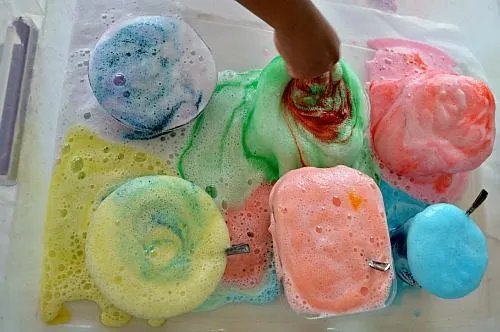
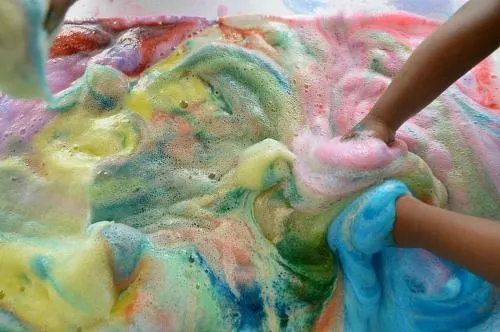
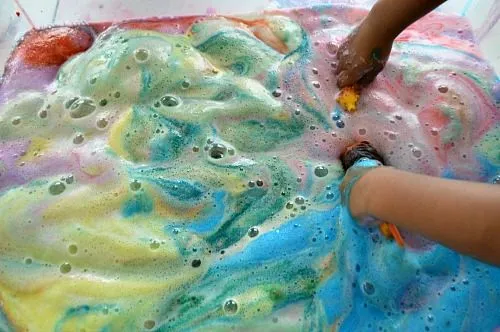
sensory rainbow eruptions The kids dumped the contents inside the sensory tub and created colorful foam. mix all colors dump all colors They went nuts putting their hands through the super foam.

enjoy foam fun They even brought in their animals for extended pretend play.

play wiht animals Seriously guys, this one was WAY TOO MUCH fun. Once I thought they were done we went ahead with the cleaning. What do you think happened there? More play time What did we actually do in this science experiment? Baking soda is a base and will react with lemon juice (citric acid) releasing carbon- di - oxide as a by-product. The bubbly gas thus released produces the super foam from the hand soap.This is an endothermic reaction which means that during the acid-base reaction heat is absorbed and the super foam is COLD to touch. Such a fun and exciting sensory experience! Ok that’s not all folks. If you eliminate the colors you will have created a natural, homemade cleaning agent. How cool? Use baking soda, soap and lemon juice/citric acid concoction for cleaning Recipe for Lemony Sudsy Eruptions: This “recipe” is pretty forgiving. But if you want a starting point, this is what I used.

  • 1/4 cup clear hand soap
  • 3/4 cup warm water
  • 2 tbsp baking soda
  • 2 tbsp and bit more citric acid

Quick Tip: The more the kids stir the concoction the bigger the foam and the result is all the more dramatic..

Thanks for reading

What readers say

💬 15 comments ✍️ 4 answered by the author 🍎 tried with 1 classes or groups

Answered by the author

“Is this really a science experiment?” · priya

Author Yes. It is a simple acid-base endothermic reaction between citric acid and sodium bicarbonate.

“Should I use baking powder or bicarbonate of soda?” · carole

Author Baking soda is bicarbonate of soda, so use that.

“Which makes more foam, the vinegar experiment or the citric acid?” · Eve

Author The author says soap and lemon juice makes a ton of foam.

🍎 In the classroom

Planned for a Brownie troop

A troop leader wants to bring the foam eruptions to her Brownie troop.

“I have a brownie troop who would love this”
Laurie Madsen, Oct 2014

🛠️ Troubleshooting

Mind citrus and sunlight on skin

A reader cautions about phytophotodermatitis, a skin reaction linked to citrus on skin plus sunlight.

“Just be aware of the danger of citric acid and sunlight -- Phytophotodermatitis”
BC, Sep 2013

🛠️ Troubleshooting

Use baking soda, not baking powder

A UK reader asked which product to buy; the author confirmed baking soda means bicarbonate of soda.

“Baking soda is bicarbonate of soda.”
TurkeyMom, Sep 2013

🎉 Worked for us

A 5-year-old loved it

A reader did the activity with a 5-year-old niece and says they all enjoyed it a lot.

“my 5 years old niece loved it too much”
Parks Daniel, Aug 2014

🎉 Worked for us

Kids loved it

A parent tried it and reports the kids loved the foam play.

“So much fun...the kids loved it!!”
Tracy, May 2014

Tried it?

Reviewed before it appears. No links, and please no children's names.

Read all 15 comments
  1. Polly · Nov 2014

    Fabulous! I'll definitely be trying this with my little ones!

  2. Laurie Madsen · Oct 2014

    I have a brownie troop who would love this, thank you for your blog!

  3. priya · Oct 2014

    Ok its good but my doubt -is is this a science experiment

  4. TurkeyMomAuthor · Oct 2014 · replying to priya

    Yes it is. This is a simple acid-base endothermic reaction { Citric Acid + Sodium Bi Carbonate}

  5. Parks Daniel · Aug 2014

    Ohhh..its really funny my 5 years old niece loved it too much..we we enjoyed a lot by during this activity. Thank you so much for sharing it..

  6. Maranda Collins Marvin · Aug 2014

    We dig this! Very cool! Thanks for all the great pictures too!

  7. Tracy · May 2014

    So much fun...the kids loved it!! Thanks for sharing!

  8. Eve · Apr 2014

    Very cool. Which makes more foam - the vinegar experiment or the citric acid? Thanks

  9. TurkeyMomAuthor · Apr 2014 · replying to Eve

    Soap and lemon juice makes a ton of foam

  10. TurkeyMomAuthor · Jan 2014 · replying to carole

    baking soda is bicarbonate of soda.

  11. carole · Sep 2013

    Wow this looks briiliant; I cant wait to try it. Can you tell me what is in baking soda as we get" baking powder"and "bicarbonate of soda" (which are used for different things) so im wondering which to use. thankyou

  12. TurkeyMomAuthor · Sep 2013 · replying to carole

    Thanks! Baking soda is bicarbonate of soda.

  13. Allison · Sep 2013

    These are so gorgeous! I'll be featuring this on The Sunday Showcase this weekend. Thanks for linking up. :)

  14. BC · Sep 2013

    Very cool. Just be aware of the danger of citric acid and sunlight -- Phytophotodermatitis

Similar activities

🛒 Materials