Click here to read about the series. Click here to read our first installment You will find many preschool math ideas and other hands on math activities that can be done using household objects.
F is for Fractions
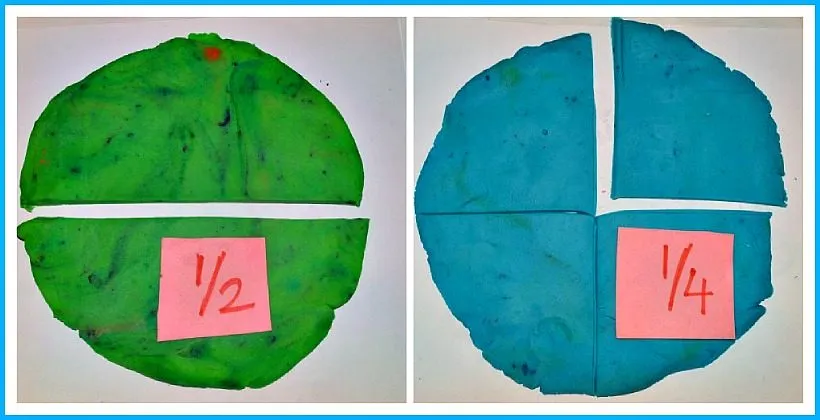 If your household has more than 1 kid, then the kids KNOW fractions. They just don’t know that the center point of their squabbles has a name! I could have done, Hershey’s fractions, cookies fractions etc but I’m pretty sure the goodies will be eaten before we explored one fourths and halves. This time we are using a popular play material : play dough to teach fractions. We started off with a box of play dough and a plastic knife. Big A made “snakes” of various sizes and we cut them into 2 pieces with the knife. As expected she said ” I cut them into halves” We then stuck them together and created a “full snake” again.
Using that as a starting point we explored the following:
- 2 halves make a whole
- Recognize fractions.
- How to write them.
- Which “piece” is larger. They will be able to do this by looking at it.
- What happens if we add two parts
We fashioned a pancake out of play dough and started cutting them into 4 parts. Having the child cut a whole play dough pancake into 4 parts was very important for her to begin to understand the concept. She is the only cutting them into 4 parts. She is the one putting the pieces together to make a whole. We also made another one and cut that one up into 2 parts. Just by looking, a kid can tell us which one is bigger, 1/4th or 1/2? Of course, the immediate question : But 4 is more than 2! I think at this age, just touching on the concept and gently introducing is sufficient. Any more denser explanation might turn off eager ears. Check out this amazing post which has top 10 books that teach fractions to kids. Don’t miss this one
G is for Games
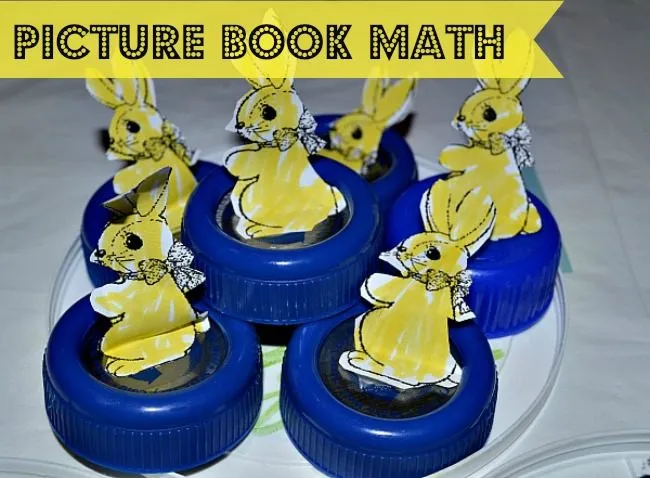
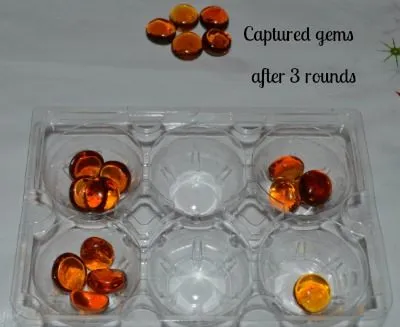 Home made math games are a fantastic way to teach simple math to young kids. Use objects from around the house to make up a game centering around the concept the kid is eager to learn . Find out how we made our own Mancala Math Game. Tailor the activity to fit the current interests of the kid. For example, while exploring addition, we fashioned an easy activity with bottle caps and a picture book. Like many children, my pre schoolers loves coming with stories, so we made up stories as we read a picture book and enacted the (addition) story with home made manipulatives.
H is for How to Teach Math
I say start young. One of the ways to make an early start is to make connections between numbers and objects with everyday life scenarios.
- Eat 5 grapes today
- How many cheerios do you have in that bowl?
- Count your fingers and toes?
While it is true that some kids can understand math easily and others not so much, we can alleviate the pressure by breaking down the concepts into simple steps. From my personal experience of being a tutor, I have identified 2 challenges: The inability to digest the concept and more importantly the urge in young kids to “guess” the answer and the process.
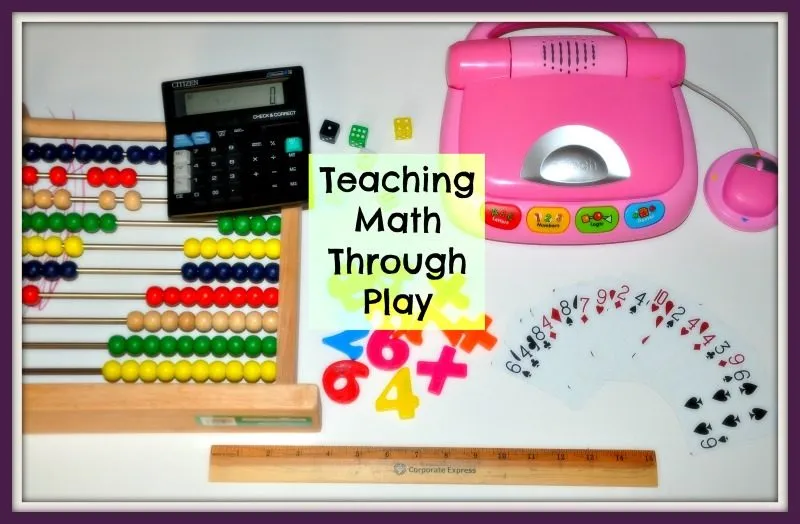 It is important to develop a mindset for Math. Inculcate in children, “Math is fun”. So, how do we do it? Here are a few simple ways :
- Focus on the process and not on getting a correct answer.
- Practice more hands on and playful learning
- Talk about the practicality of the subject and compare with real world scenarios.
- Use everyday opportunities to make anytime into learning time.
- Casual conversations where the kid starts one is the best time to explore anything
- Remember, math is not always numbers.
- Play games to improve mathematical ability.
The fun part is you can always brainstorm and come up with unique and more fun ways to teach and learn math. Learning is wisdom and the opportunities are always endless.
Visit Montessori Tidbits on an excellent ABC series post on the same topic.
I is for Importance of Math
Importance of Mathematics is paramount for Early Childhood Education. Children ‘unknowingly’ notice and explore mathematical dimensions of their world everyday. They talk about quantities, follow patterns and even perform basic operations all while trying to share a bowl of popcorn with friends or siblings. Budding Mathematicians I say ! So, how do we get from that to ” Math is not for me ? ” My BIG Question - is it true that Parents who feared Math will pass that fear on to the kids ? Well, its possible. Kids are big on Questioning things. They are not afraid to ask questions and many a times we are going to be stumped and outwitted by them. When they look up to you for answers – It is very important for us to give them what they are looking for – Responding to their questions with statements like “Math and I are not best buddies” or “ I hated Math when I was a kid” or the ever infamous “ I hate my Math teacher” puts an unnecessary fear of the subject into their minds. To ease things, it is very important to develop simple math skills in children during your regular everyday routine
- doing puzzles together
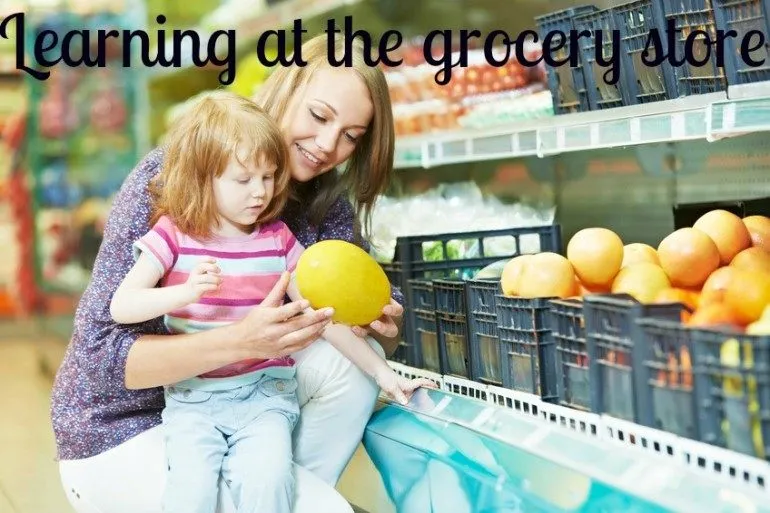
- talking about numbers - you can do this on a trip to the grocery store- 3 oranges, 6 bananas, 2 tomatoes
- asking your child to replicate your lego tower or structure.
Here is an activity we did that shows opportunities are always around us.
J is for JUMP and Learn Math
Jumping is a natural interest for any young child. So it is only fair that you use that fun energy and add some arithmetic to it and make it into a learning opportunity. Ways to make Jumping a Math activity. 1. Roll a dice – Count – Do that many jumps
2. Number Recognition Jumping exercise for a toddler– Write each number on a separate sheet of paper and spread it in a room. Call out each and get the child to jump to the number.
3. Expand on the idea to with addition and subtraction exercises for preschoolers. Look what we did: We used cups to build a wall by stacking and jump over it
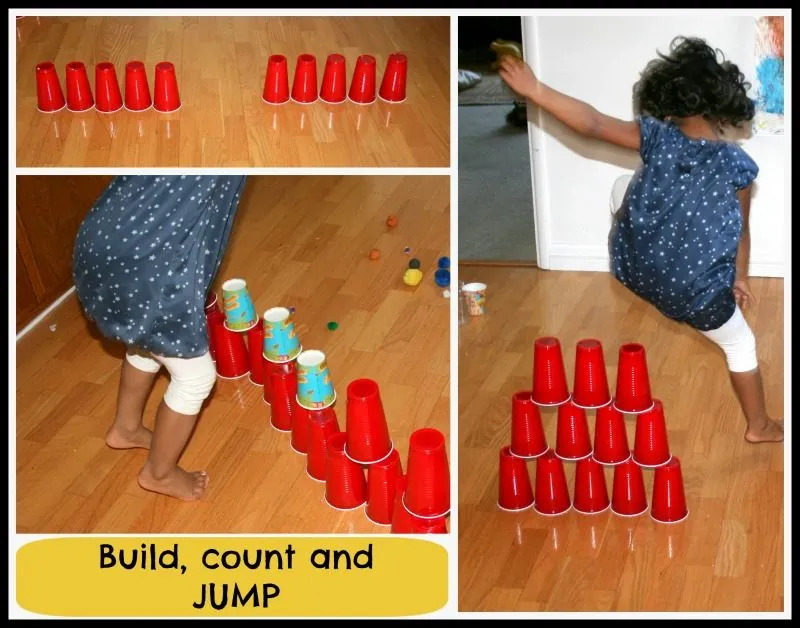 Lessons learnt:
- Building Rows
- Stacking
- Counting
- Creating height
Here are a few more from your favorite bloggers:
Click here to read the third part of the series : K-O
Click here to read the fourth part of the series : P-T
Click here to read the final part of the series : U-Z
Thanks for reading
Please take a moment to comment Thanks for stopping by our little space here. We encourage you to stick around and take a look at couple of our popular posts.
This post is a part of a ABC series brought to you by 70+ bloggers and hosted at “This Reading Mama”. Check out her blog and thanks for the amazing work she has put into organizing this event. Kudos to her!
Look at all the topics other bloggers have covered MOM TIPS & TRICKS:
Read all 4 comments
TurkeyMomAuthor · Aug 2013 · replying to Nichole {youclevermonkey}
Thanks for the share! Yeah even a younger toddler with older siblings seems to know 1/2 + 1/2 lol..
Nichole {youclevermonkey} · Aug 2013
Loving this series of yours :) So true - kids who have siblings know fractions!
Krissy · Jan 2013
Loving this series. Pinning for later!
Varya @ littleartists · Jan 2013
SO many fun ideas!!We have the same Vtek computer for kids!