Welcome to the final part of the ABC series of hands on math activities. To read the introductory post on the series, visit here. Below you will find the links to earlier posts. Part 1 , Part 2, Part 3, Part 4.
U is for Units
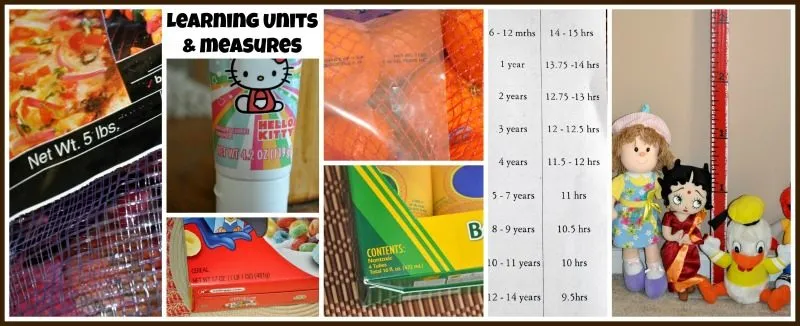
Understanding the concept of units is a long shot for a preschooler. But that said just like many words that we learn each day “Units” is part of every number we talk about. It gives the number a meaning.
< 
For Example:
Ask your child this : How old are you?
If he/she responds with : I’m four
Ask 4 what?
I’m 4 YEARS old ! Years is a unit of time. Talk about why it is important to give the number 4 a meaning and a unit. Here are a few more examples for discussion:
- How tall are you?
- How much do you weigh?
- How many rooms are there in your home?
All of the above are topics that have a number which requires a description and meaning to it.
V is for Venn diagrams
Venn diagrams are a pictorial representation of data sorting. The usual representation is two overlapping circles. A simple sorting exercise is a very good way to introduce venn diagrams to kids. A 4 or 5 year old need not know Venn diagrams, but, what they will have fun with is to find commonalities between 2 objects.We are just assigning the name to the game.
Sorting with Venn: This exercise shows a relationship between animals and nature.
- Choose some land animals and water animals.
- Land animals – cow, dog, monkey, cat, rat, alligator
- Water animals – octopus, fish, whale, crab, seals, turtles
- Create two overlapping circles with hula-hoops. One to show land animals and one to show water animals and the overlap shows animals that can live on both.
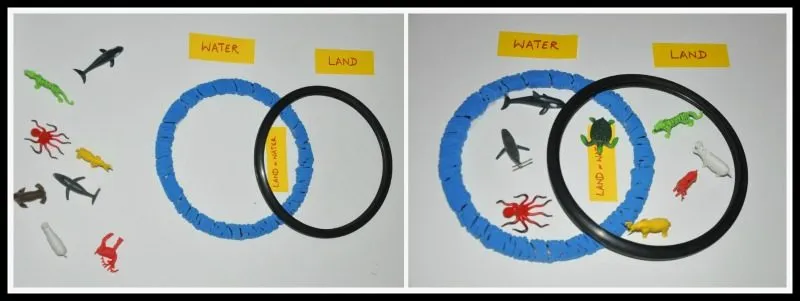 This also teaches a new word amphibians. Other ways to explore:
- Color sorting
- Play with play dough - mix and create colors and represent with venn diagrams
- Sort clothes for weather
- Relationship between colors (red+ blue= purple)
W is for Wheel Math
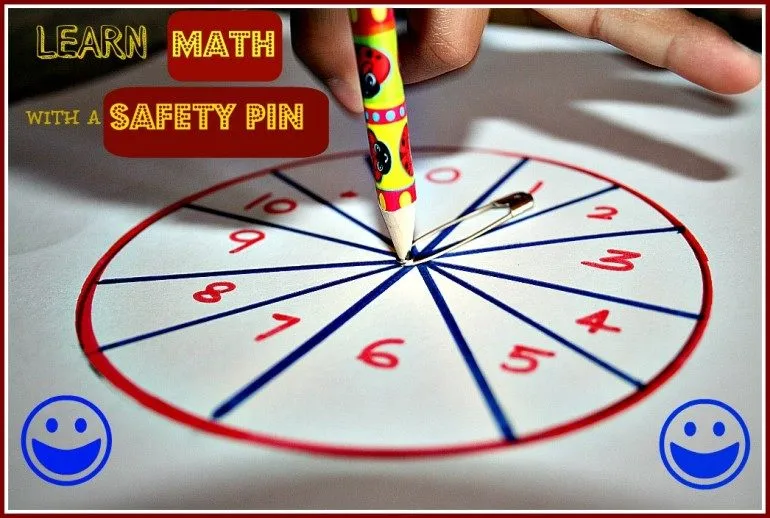
Learn math with a wheel and a safety pin. This fun math activity is designed to teach number recognition, counting, simple addition and understanding quantity. Better yet, it can be converted to a 2+ player game and is perfect for siblings to learn together. It has a very basic set up that you can modify the game to whatever suits your child’s needs and interests. Number wheels are a great way to learn, counting, addition, number recognition. Turn a static number wheel into a spinner and make the game more appealing to young minds.
X is for the Unknown Value
Children are good guessers. They have a strong intuitions and are not afraid to test it. In plain mathematical terms its estimation. We are born with the ability to make numerical estimation as to which of the two jars have more in them without having to count. This improves through childhood years and later transforms into an intuitive ability of finding the hidden values or in mathematical sense solving the unknown. Here are a few fun ways to get started:
- Choose a candy jar and a bag of candy. Ask your child -How many candy do you think can fit into the jar?
- Take a palmful of cheerios and ask how many cheerios do you think are there in my hand?
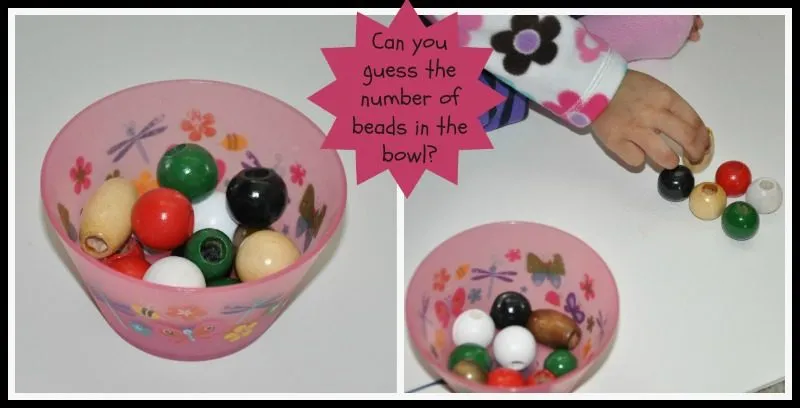 You have taken the first step in telling your child to tune in with his or her numerical estimating skills. Preschool math doesn’t have to be rocket science. Find math around your home. Simple counting , adding, estimating keeps the mind exercised and sharp.
Y is for the “Y’s”
 I know I’m using a homophone here. Think about it though. Imagine the number of “why’s” we encounter during a typical day as a parent/grand parent/care giver. While it surely is easy to dismiss a child’s inquisitive “Why?” questioning with a “Because I said so” reply, it’s best not to practice it ! Now before I begin, let me tell you I’m not a child expert or a qualified professional of any sort. But, I have done my research to find out how to answer the “Why’s” appropriately. There have been one –too many time my patience has been tested and I have said – “ Stop asking so many questions” or Shhhd ’ them simply because I did not know how to deal with it anymore. But when the same is handled with care and wisdom,you are for sure going to make them think harder, analyze deeper and solve problems smarter. For example : Me saying – “ its bed time and you need to sleep” is immediately countered with “Why?” Just the facts in this case, which is me saying– “Well, it’s night time and you need to sleep” will not suffice the curious mind. I have learnt to direct the question back at her with a “Why do you think we need to sleep ? “
- My body is tired and I need some good rest.
- My eyes need to stay closed so I can rest them well so we can do more reading tomorrow.
- I will be well rested and will have all the energy for school tomorrow.
Well, the kid will not be able to articulate all these responses on the first go, but having her think about her questions a bit deeper will take her on a path that encourages problem solving ability and develops cognitive skills. It teaches them to brainstorm for ideas, express their thoughts and explore possibilities. It helps them exercise their brains and develop thinking skills and come up with creative ideas. Just remember that you have directed the question at her – so be ready for all the possible explanations. Math is all about asking questions, solving problems in more than 1 way and exploring possibilities and unchartered territories. Encourage the why’s and sharpen the left brain.
Z is for Zero
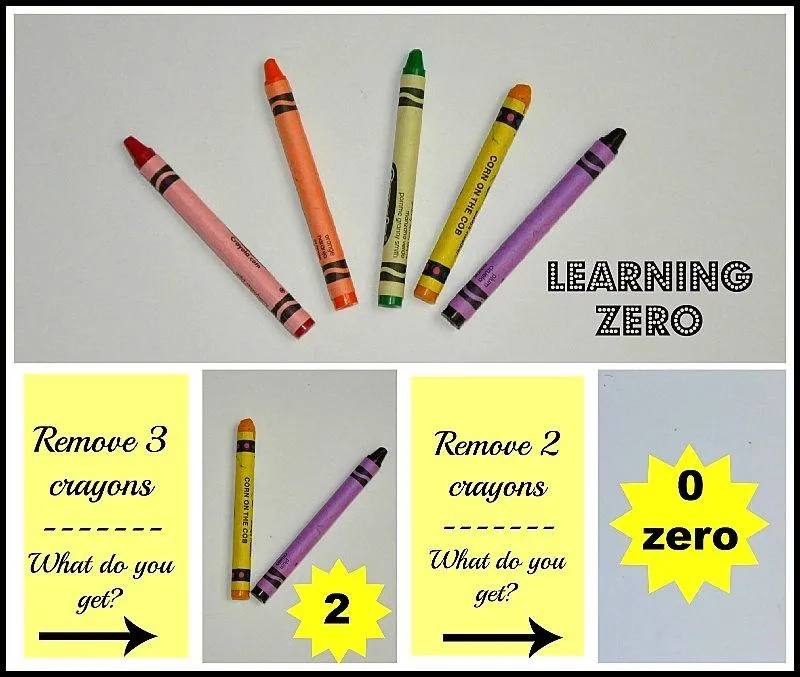
How can a math post be complete with out writing about zero? What is Zero? To preschoolers, zero is the number that represents for “nothing or none” ! Ways to teach zero:
Exercise 1 : Using Subtraction
Place 5 crayons on the table and now take away 3. Ask how many left? The answer is 2.
Now, take the 2 away and ask how many left ? Answer : Nothing left. Now explain mathematicians gave a name for nothing and it is ZERO !
Exercise 2 : Using Counting and Recognition skills
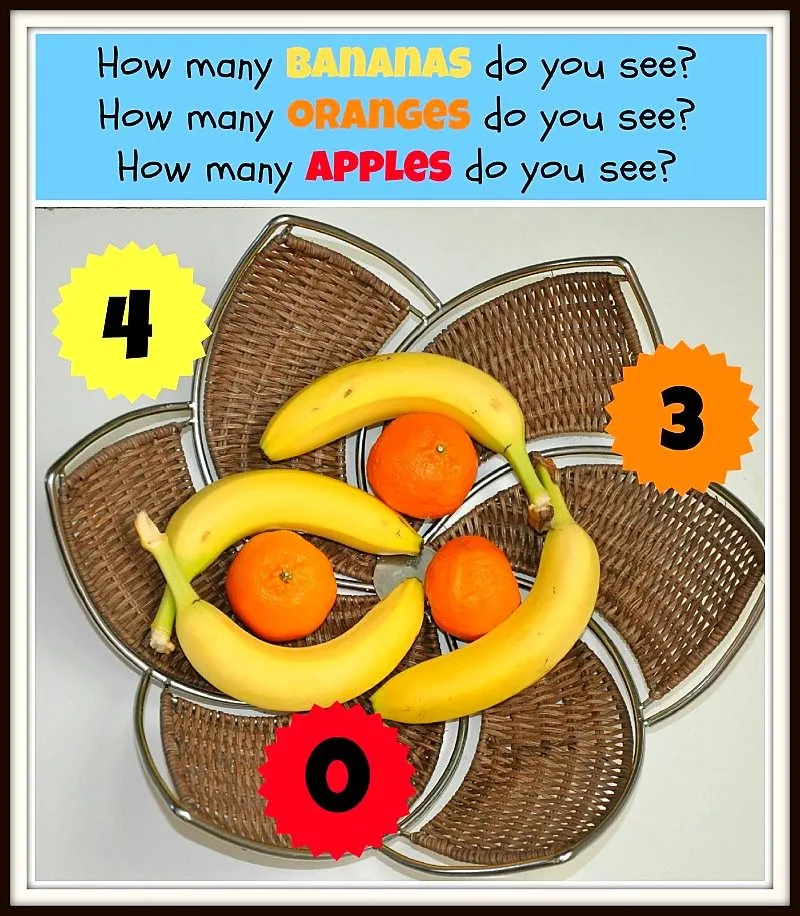
Get a bowl with some bananas and oranges. Ask them to count the number of bananas and the number of oranges. Now ask them to count the number of apples in the bowl. Are there any apple in the bowl? NO ! There are no apples in the bowl which means the bowl has “ZERO” apples in it.
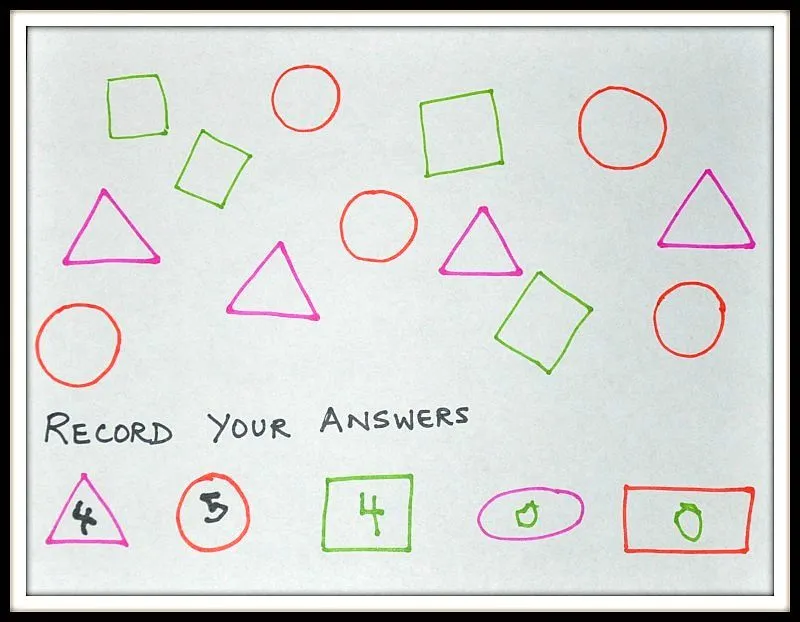
Exercise 3 : Drawing zero objects. It may not sound right to adults to “draw zero objects” but this is a very kid-friendly way of representing zero.
Draw several sets of squares, triangles, circles on a piece of paper. Ask how many squares? How many triangles ? Be sure to include shapes you have not drawn, ovals, rectangles. Provide a place to write their answers.
That concludes the ABC series.
Thanks for reading
Please take a moment to comment Thanks for stopping by our little space here. We encourage you to stick around and take a look at couple of our popular posts.
This post is a part of a ABC series brought to you by 70+ bloggers and hosted at “This Reading Mama”. Check out her blog and thanks for the amazing work she has put into organizing this event. Kudos to her!
Look at all the topics other bloggers have covered
- Books for Preschoolers from Mommy and Me Book Club
- Building a Home Library from Ready Set Read!
- Early Language Learning from Playting with Words 365
- Early Literacy from Playdough to Plato
- Exploring Books from JDaniel4’s Mom
- Graphic Novels from Pragmatic Mom
- Learning to Read Through Play from Mom to 2 Posh Lil Divas
- Learning to Write from NurtureStore
- Reading Comprehension for Pre K-Grade 1 from The Wise Owl Factory
- Storytelling from A Mom with a Lesson Plan