Quick! A silk worm is not a worm, but a ----? Yes, a moth. Why the sudden interest in silk worms? Apart from our recent worm land creation and our long standing affinity with anything wildlife we came in possession of an amazing children’s book Bijoy and the Big River by the very talented Meera Sriram and Prabha Ram. Meera took the time to send us this wonderful book for a review along with a beautiful handwritten note. The book’s central theme is ” Where do I live” as it takes the children along a beautiful journey of Assam and its bane and boon - Brahmaputra river. The river provides livelihood for all the people and at the same wreaks havoc by flooding the place as well. While the book doesn’t go into the details of flood and its damage (which is great ) I know the feeling all too well having lived in the city for a while. 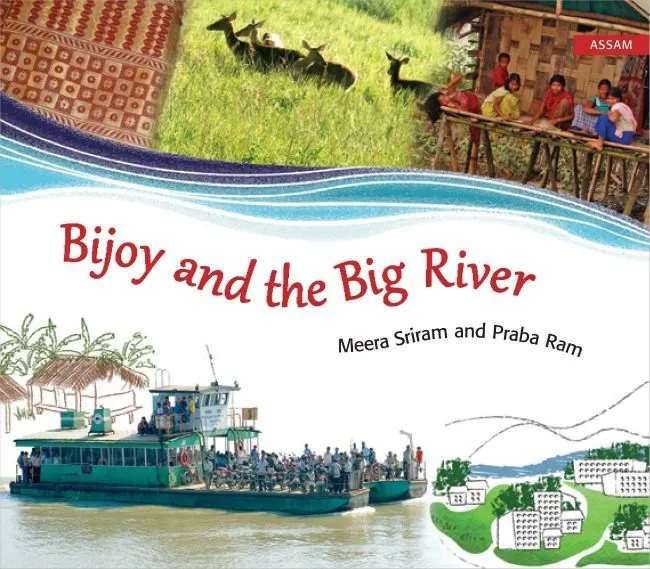 The book shows the readers a very interesting yet largely unknown part of India- the Northeast, specifically the state of Assam. Assam is known for its silk, eri silk which is also known as “peace silk”. Why is it called peace silk? You got to read the book to find this amazing fact. The book’s protagonist is a little boy, the son of an eri silkworm cultivator and the book talks about a day in his adventurous life. This picture book does everything right to capture a child’s attentions. Starting with captivating images to interesting tidbits about a new culture and land, Bijoy’s book is an exciting read. Although the authors recommend the book for school age children, parents can easily paraphrase for younger children. My child was completely enthralled by the part on silkworms. The book gave us just enough information that a child would find exciting enough. My 4 ear old was interested in silkworms after reading the book that we went about gathering more information. Another great part younger kids will find interesting is when xihu, the river dolphin makes an appearance. The book also explains in detail the highlights of the city and the life of a silk merchant. It is specifically would be a great resource for school age children to learn about the process of making silk from eri silk worm cocoons. The images showing the spinning and reeling of silk are a great way to let the kids understand what they are reading. If you are looking to introduce your child or your classroom to a new culture, this would be a wonderful book to pick up. It is also an appropriate book for a “My City” geography unit. Book Extensions Engaging in an activity based on a book is a wonderful way to process what we read. Every kid will be drawn to some aspect of the book and we here thought that the silk worms were wonderful to study. While the book’s central theme is ” Where do I live” we focused on the science bit. The book gives a good deal of information about the life cycle of an eri silk worm ( different from the mulberry eating silkworms) and the process of extracting silk in a very simple manner. I especially liked the facts on every page. What better way to show a life cycle than a simple sensory bin? The actual larva stage of the moth goes through 5 phases but we are keeping it simple for our preschooler.
- Shells
- Cotton Wool
- Marshmallows
- Sticks and leaves
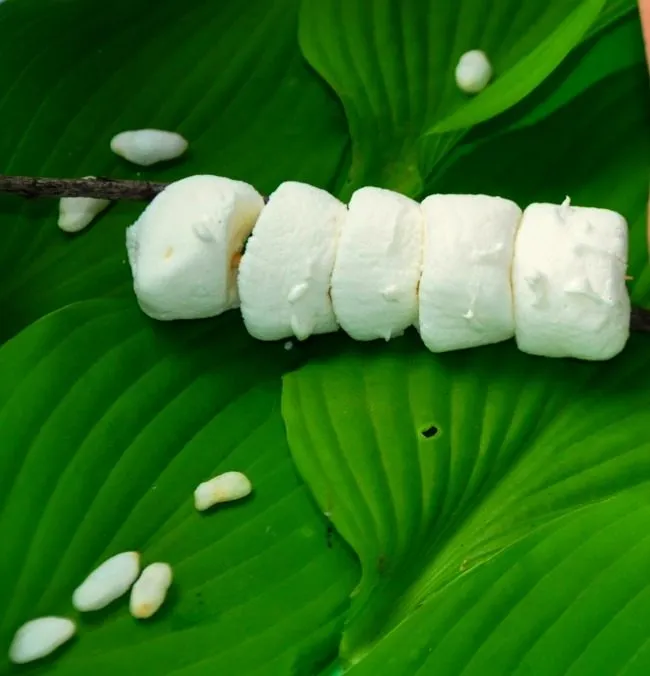
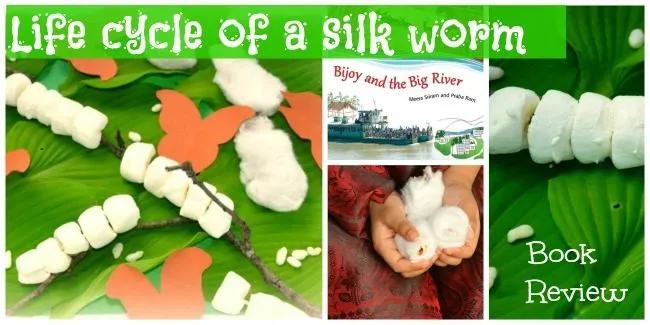
Pearl shaped sprinkles can be made to look like eggs but we used bit of melted marshmallow and cotton balls to create small eggs. Making the caterpillar larva was the best part. We used a small stick and strung white marshmallow bits to form caterpillars.
edible caterpillars
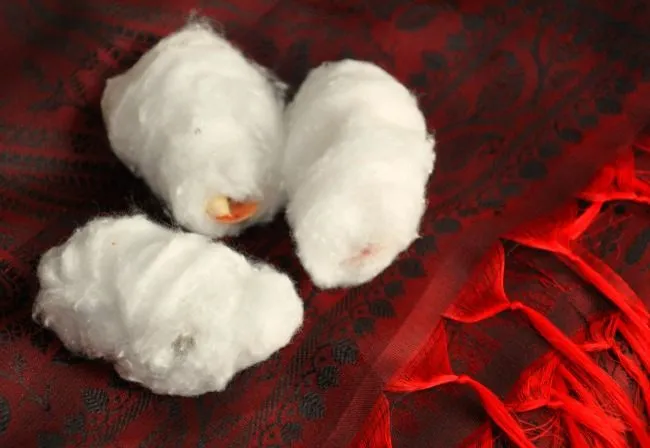
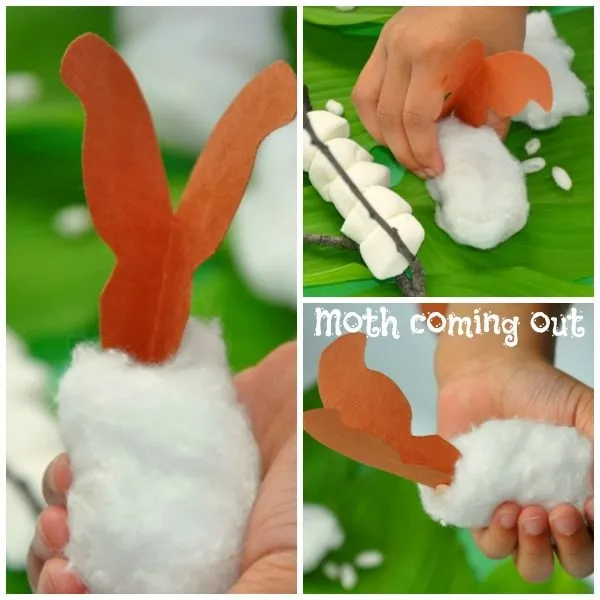
Making the cocoon was just as easy and simple. We used a conical shaped shell and wrapped cotton wool around it. We picked a shell because moth escapes through a small opening at the end of the cocoon before the cocoons are harvested.
shell-cotton wool cocoons
The moths were paper cut outs. With these 4 items we created a sensory bin and added a few leaves and sticks for additional exploration.
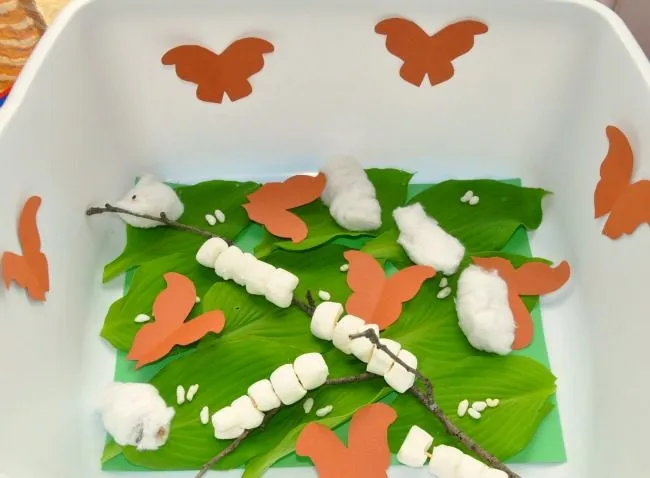
We talked about the entire life cycle of an eri silk worm and how they are different from other moths and even butterflies.
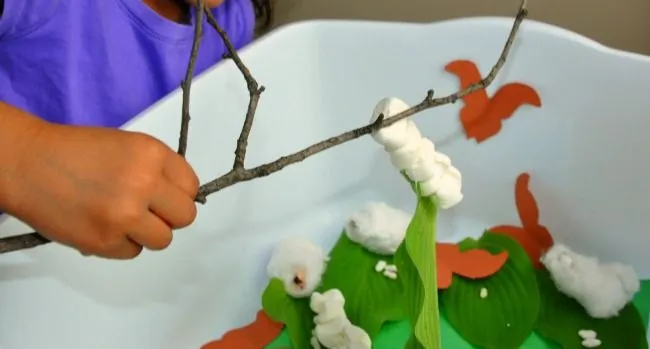
My 4 year old touched and felt each item ( stage of the process) and created the cycle all over again while creating her own story lines. It was great to see her enact the life cycle all by herself and make it sound like a play! What a great way to absorb a process of life!
If you are looking to purchase the book - Tulika Books
For the author’s bio - Meera Sriram.
More children’s books on Pinterest.
Thanks for reading
Thanks for stopping by our little space here. We encourage you to stick around and take a look at couple of our popular posts.

Read all 1 comments
Lucy Ravitch · Apr 2013
I still remember that we had silk worms in my 1st grade classroom and it's been over 25 year since then now. Great post! Kids Math Teacher