Fun Littles

Fun and easy kids activities

Valentine's Sensory Jars

Feb 5, 201415,072 views
Sensory bins
Ages3–8 yrs
Prep25 min
Activity30 min
Leveleasy
MessMedium
Works for1:1 · Small group · Class

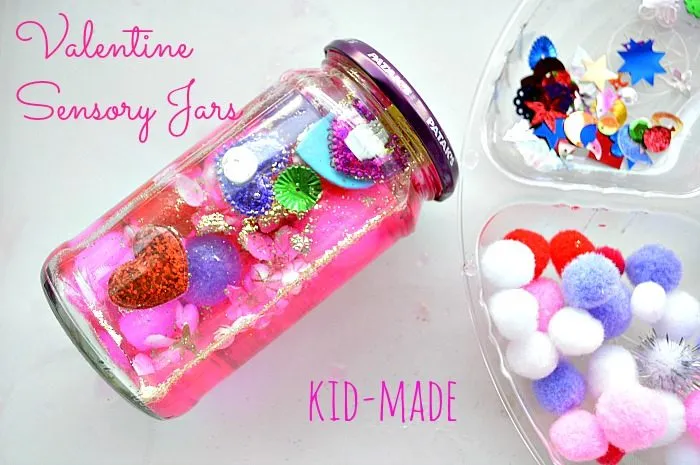
Kids tint water in a jar with liquid watercolor, then drop in pom poms, foam hearts, spangles, flower petals, glitter and bath salts to make their own shimmering Valentine's sensory jar. Along the way they explore what sinks and what floats.

⚠️ Safety first

  • Glass jars can break. The author notes you can easily avoid glass and use any jar or bottle you think is safe for your household, and plastic is the safer choice for groups and younger kids.
  • Pom poms, spangles, foam stickers and other small pieces are choking hazards. Supervise closely, especially with toddlers.
  • Bath salts and glitter are not for mouthing and can irritate eyes. Wash hands after play.
  • Close the lid tightly before kids shake or carry the jar, and display finished jars somewhere safe, out of reach of little ones.

Before the kids arrive

  • Collect empty jars (and lids) and wash them.
  • Go around the house with the kids collecting things that can go into the jars.
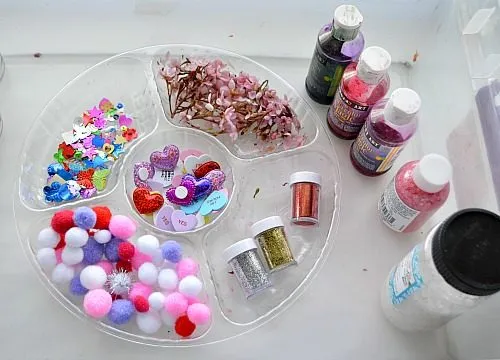
  • Set the add-ins out in a divided tray or small bowls.

Steps

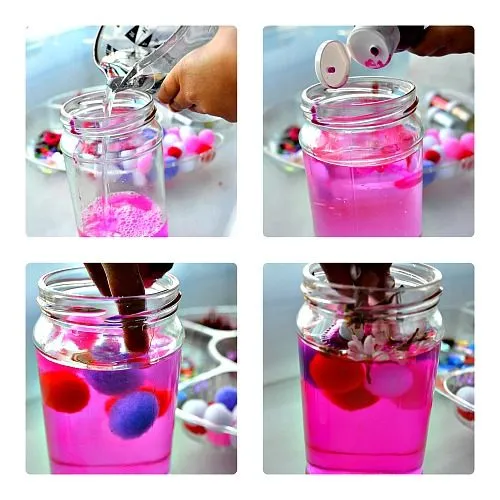
  1. Pick an empty jar.

  2. Add a few drops of your favorite liquid watercolor.

  3. Pour water into the jar until you like the color.

  4. Drop in pom poms, puffy stickers, foam stickers and flower petals.

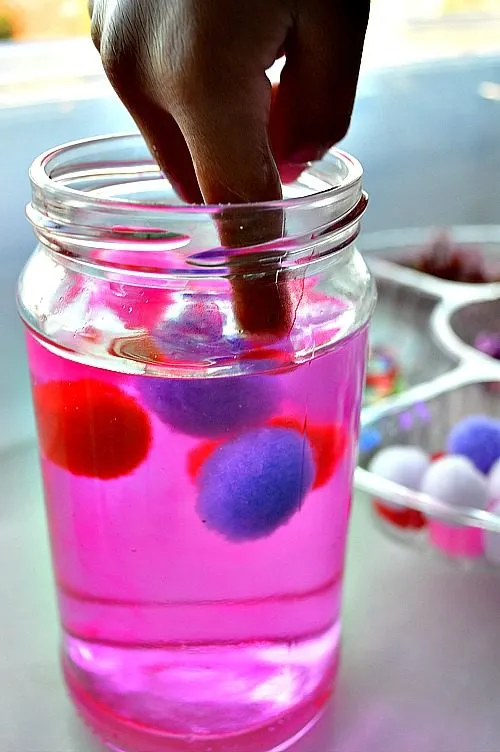
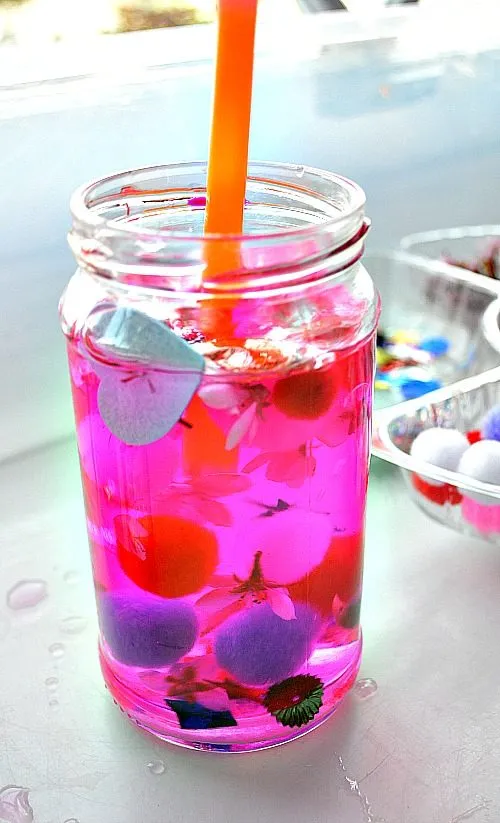
  5. Stir with a straw and push the pom poms down. Watch what floats up and what sinks.

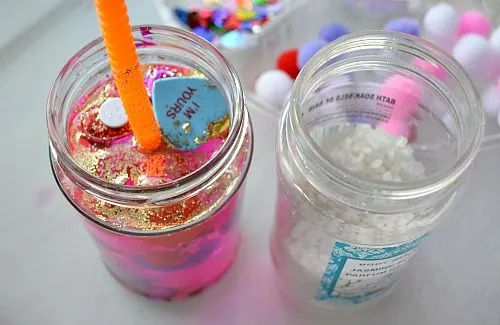
  6. Let the jar rest, then sprinkle in silver and gold glitter.

  7. Add a couple of pinches of bath salts.

  8. Close the lid tightly and put your jar somewhere safe to show it off.

Tips

  • Make it collaborative: talk about sensory jars first and let the kids decide what goes in. Including children in setting up is just as important as playing.from the author
  • The best part was going around the house collecting all the things that can go into the jars.from the author
  • Use a container with a spout so the children can pour the water independently.from the author
  • When children create something themselves they're generally not destructive with it, because they take ownership and pride in their work.from the author
  • A simple jar with just a few elements looks lovely too.from the author
  • Light things like pom poms and foam stickers float. Heavier beads and sequins sink to the bottom. With older kids, turn it into a float-or-sink science experiment.from the author
  • One reader's glitter, beads and sequins clumped at the bottom while the pom poms and foam stickers stayed on top. It was still a big hit.from readers

Make it your own

  • Make it a float-or-sink science experiment with older or school-age kids and talk about Archimedes' Principle.
  • Use a plastic jar or bottle instead of glass.
  • Keep it simple with just a few elements, like foam hearts and pom poms.
  • Make jars for other seasons, like our Fall Sensory Jars and Snow Jars.

Questions readers asked

What's the point of the bath salts?

The activity is very process oriented: the children choose what they want to add to their 'concoction'. Bath salts are optional.

Why did our glitter, beads and sequins clump at the bottom?

Light items like foam stickers and pom poms float, and heavier ones like beads and sequins sink to the bottom of the water. That's a great sink-and-float talking point.
The story behind it

By TurkeyMom · February 2014
Sensory Activities for Kids : Valentine's Sensory Jars
It's time to create another set of sensory jars. I love to collect all kinds of jars, a habit I picked up from my mother: never throw away glass jars!
1 / 8

Valentine's Sensory Jars: the original post

It’s time to create another set of sensory jars. I love to collect all kinds of jars. A habit I picked up from my mother , never throw away glass jars! With my stash overflowing it was time to put it to use and what’s better than showing these jars some love by making Valentine’s sebsory jars. Remember our Fall Sensory Jars and our recent Snow Jars?

materials for valentines sensory jars

Instead of me setting out all the materials, we made this into a collaborative process. I talked to them about making sensory jars and immediately my 5 year old had ideas about what can they go in the jars. We combined all our ideas ( including my 3 year old - her idea was GLITTER!) and set out the materials. I always try to include my children in setting up part of the activity since I think it is just as important as playing.

Since my 5 year old has already done this, when we did our fall sensory jars she knew how to make her own sensory jar using the supplies. She was pretty excited and took much pleasure to show her baby sister how it’s done. Baby sister 3 had her own ideas though.Ha!

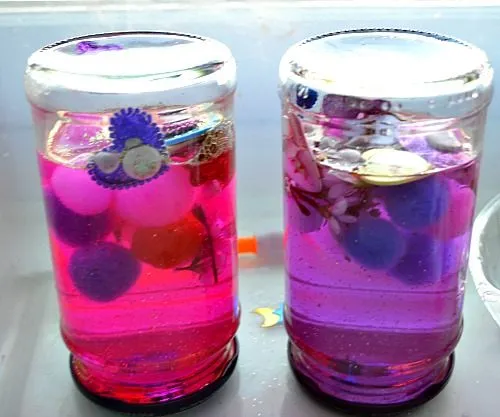
She started off with a few drops of her favorite liquid water color and poured water into the jar. ( Try to use a container with a spout so you can have the children do this part independently) Once she got the right shade of magenta water, she went ahead and added all the fun sensory elements we had collected. She added, pom poms, puffy stickers, foam stickers and flower petals first.

creating sensory jars for valentine's day

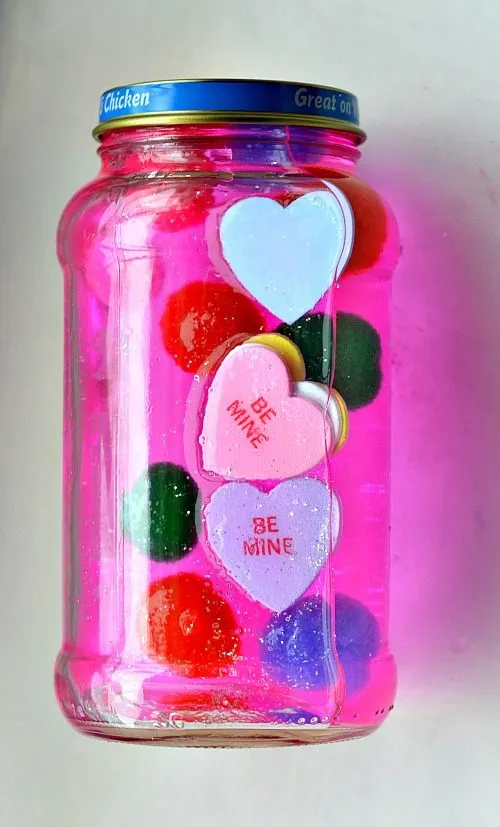
It was fn for both of them to experience sink and float. Big sister was trying to push the pom poms down and delighted in seeing them pop up and float on top. She played with a straw and was squishing the pom poms and mixing the solution and generally playing ” concoctions” { We did a similar activity last spring - Spring Potions”} pushing the pom poms down understanding floating and sinking It was the perfect opportunity when she brought up floating and sinking. Baby 3 chimed with the same concept much to my surprise (!) she learned at school. They personally saw the pom poms and foam sticker float up and the spangles sink to the bottom of the Valentine’s sensory jar. After much stirring of the straws, jar was allowed to rest. Why? to add glitter ofcourse! No respectable glitter lover will make a pink Valentine’s sensory jar with glitter! all glittered up sensory jars There, we added silver and gold glitter and even a couple of pinches of bath salts. adding bath salts while creating Valentine's day sensory jars It was a very engaging sensory activity for the children. The best part was where we went around the house collecting all the things that can go into the Valentine’s sensory jars.

They will look great perched atop your mantle or any place you deem safe. You can easily avoid the glass and create the same sensory jars with any other jar/bottle you think are safe for your household. I always observe that if the children create something by themselves they are generally not destructive with those objects because they take ownership and pride in their work. Well if I had made say a jar candle, then that’s a whole different story since I need to really keep them safe.

Shimmering sensory jars

A simple jar with just a few elements

love sensory jars

What readers say

💬 5 comments ✍️ 2 answered by the author

Answered by the author

“What's the point of the bath salts?” · Deba Bryant

Author The activity is very process oriented: the children choose what they want to add to their "concoction", and bath salts were one of the things they picked.

“Why did our glitter, beads and sequins clump at the bottom while pom poms stayed on top?” · Logan

Author Light items like foam stickers and pom poms float; heavier ones like beads and sequins sink. With older kids, make it a float-or-sink experiment about Archimedes' Principle.

🛠️ Troubleshooting

Glitter and sequins sank to bottom

A reader's glitter, beads and sequins clumped at the bottom while pom poms floated. The author explains light items float and heavier ones sink.

“We made them but all our glitter, beads, and sequins clumped up at the bottom, do you know what caused that to happen?”
Logan, Feb 2014

✨ Readers' twist

Make it a sink-or-float experiment

For older kids, the author suggests turning the jars into a float-or-sink science experiment and exploring Archimedes' Principle.

“If you are working with older kids, you can make this into a float or sink science experiment and delve into Archimedes' Principle.”
TurkeyMom, Feb 2014

🎉 Worked for us

A big hit at home

A reader who made the jars called the idea cute and a big hit, despite some sinking glitter.

“Cute idea none the less, a big hit! Loved it!”
Logan, Feb 2014

✨ Readers' twist

Let kids choose the ingredients

Asked why bath salts, the author explains the activity is process oriented: children pick what goes into their own concoction.

“The whole sensory activity is very process oriented - the children choose what they want to add”
TurkeyMom, Feb 2014

Tried it?

Reviewed before it appears. No links, and please no children's names.

Read all 5 comments
  1. Deba Bryant · Feb 2014

    Just curious - what's the point of the bath salts?

  2. TurkeyMomAuthor · Feb 2014 · replying to Deba Bryant

    The whole sensory activity is very process oriented - the children choose what they want to add in their "concoction"..

  3. Logan · Feb 2014

    We made them but all our glitter, beads, and sequins clumped up at the bottom, do you know what caused that to happen? the pompoms and foam stickers are at the top. Cute idea none the less, a big hit! Loved it!

  4. TurkeyMomAuthor · Feb 2014 · replying to Logan

    Hi Logan, thanks for reading. The foam stickers and pom poms being very light tend to float. Heavier objects like beads and sequins will sink to the bottom of the water. If you are working with older kids, you can make this into a float or sink science experiment and delve into Archimedes' Principle. I bet even school-age kids would enjoy making and playing with these.

Similar activities

🛒 Materials