Fun Littles

Fun and easy kids activities

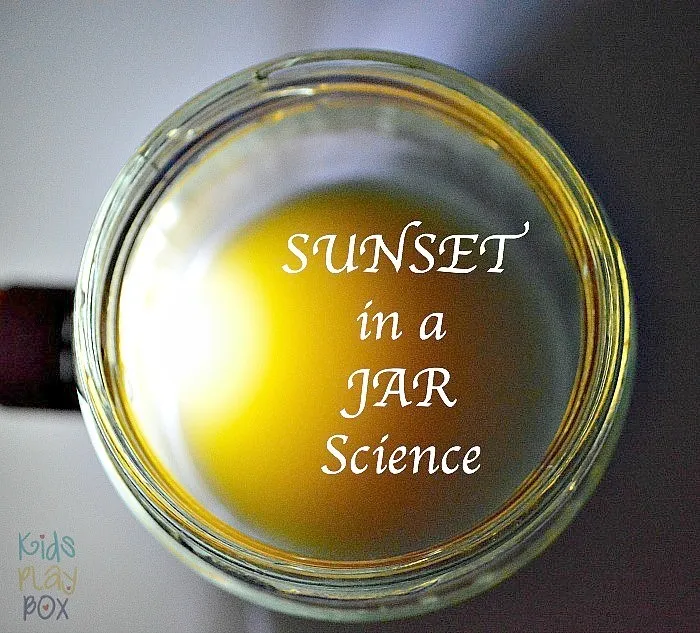
Sunset in a Jar Science

Feb 1, 201519,336 views
Science
Ages5+
Prep5 min
Activity20 min
Leveleasy
MessLow
Works for1:1 · Small group · Class

In a dark room, shine a flashlight through water clouded with more and more milk. The 'sky' turns pale blue, then yellow, then a deep orange 'sunset', a hands-on way to see how light scatters.

⚠️ Safety first

  • Glass jars and cups can break. Set them on a stable table and have an adult supervise, especially in the dark.
  • Don't shine the flashlight into anyone's eyes.
  • Clear the floor before turning the lights off so no one trips in the dark room.
  • The milk is for the experiment, not for drinking once it has been sitting out. Wipe up spills and wash hands after.
  • Milk is a dairy allergen. Check for dairy allergies before running this with a group.

Before the kids arrive

  • Find a room you can make dark for the best viewing.

Steps

  1. Fill a tall clear jar or cup with 1 cup of water. Keep the milk and a measuring spoon nearby.

  2. Shine the flashlight through the clear water. The light goes straight through without scattering, like air with no dust.

  3. Add about 2 tbsp of milk to the cup of water.

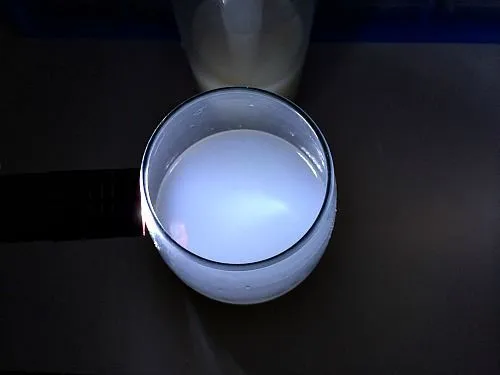
  4. Move to a dark room. Shine the flashlight through the side of the jar and look for a pale blue color, like the midday sky.

  5. Put the flashlight behind the cup and look down from the top. Each position is like the Sun at a different time of day.

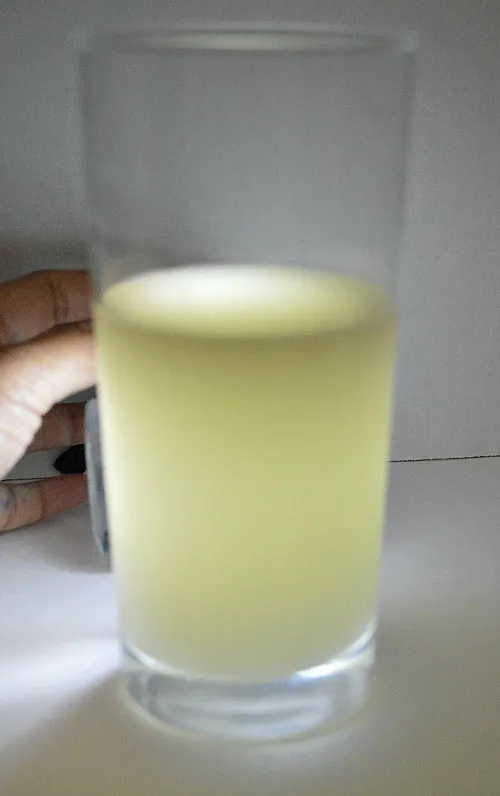
  6. Add more milk and shine the light from the side and from behind again. Watch for yellow or orange.

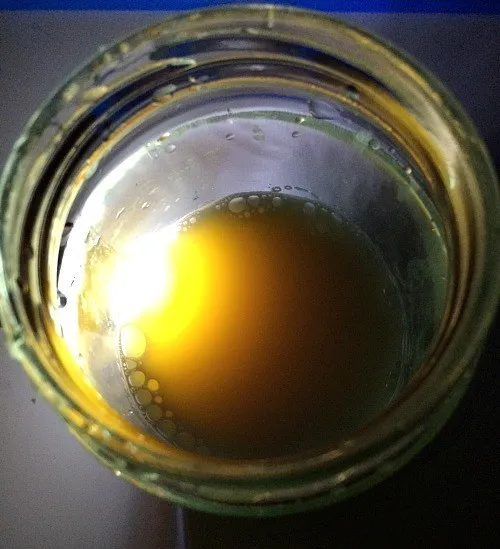
  7. Fill a jar completely with milk and shine the light through it to see a deep yellow-orange sunset.

  8. Talk about it: blue light scatters the most, and more dust or pollution in the air makes sunsets brighter and redder.

Tips

  • Move the experiment to a dark room to have the best experience.from the author
  • You may see more of a yellow or occasionally an orange, depending on the type of milk you are using. I used 2%.from the author
  • Keep moving the light source. The different flashlight positions correspond to the Sun at midday, sunrise and sunset.from the author
  • So you DON'T want a bright red/orange sunset: the more polluted the atmosphere is, the brighter and redder the sunsets are.from the author

Make it your own

  • Try different flashlights.
  • Use differing amounts of milk or different types of milk.
  • Vary the shape of the container.
  • Hold the milky water in a clear, round Aqua Balls bottle (wrapper removed) to mimic the shape of the Earth.

The story behind it

By TurkeyMom · February 2015
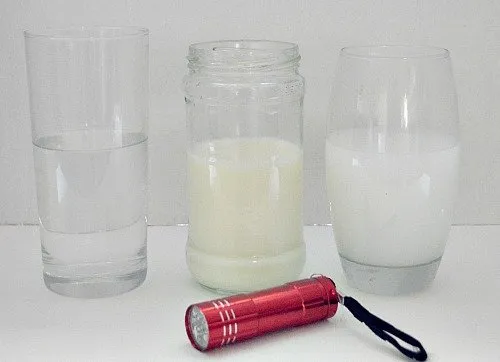
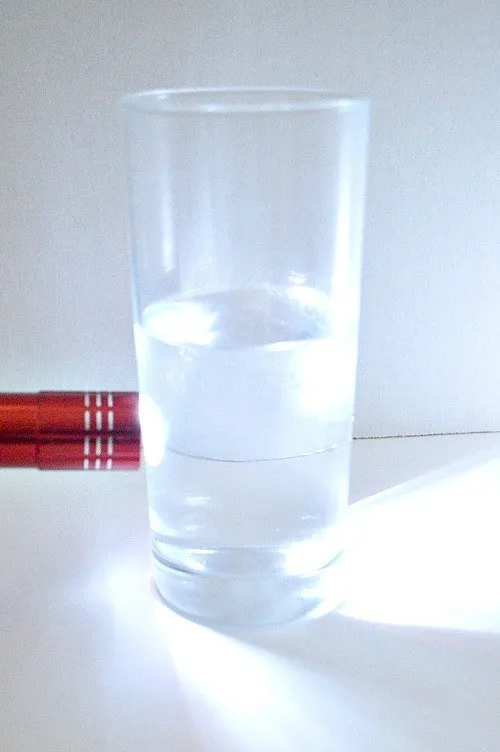
science experiment materials
A fun science experiment using just water, milk and a flashlight. Start by setting out clear water in a tall glass jar, with some milk (I used 2%) nearby.
1 / 5

Sunset in a Jar Science: the original post

  • Glass Jar or tall cup
  • Milk
  • Flash Light
  • A dark room

This popular and fun science experiment was on our to-do list for a long time! We adjusted the original experiment a little bit and focussed more the effect of milk {dust particles in the atmosphere} in the water. Start by setting out clear water in a tall glass jar/cup. Have some milk { I used 2%} near by and a measuring cup/spoon near by.

science experiment materials First shine the flash light through the clear water in the jar. Explanation : The flashlight is acting like the Sun and the clear water is acting like the atmosphere. The water is like the atmosphere without ANY dust particles suspended which is never the case. The light doesn’t get scattered. white light through clear water Now to 1 cup of water add about 2 TBSP of milk. Move the science experiment to a dark room to have the best experience. Shine the flash light through the side of the jar and observe the color. You should start seeing the liquid in a pale blue shade. By adding the milk you are adding more particles to the water { suspended dust particles in the atmosphere - the fat molecules in the milk are going to make the light react differently} Move the flash light and shine it from different positions { behind the cup and observe from the top} The different positions of the flash light correspond to the different positions of the SUN { rather the different positions of the earth relative to the Sun} Why do you see the blue? How does it relate to the blue sky? Out of the colors of the visible spectrum blue scatters the most. At midday { when the flash light is to the side} the sunlight doesn’t have to travel much to reach Earth { compared to sunrise and sunset times}. Human eye captures the blue light which scatters the most during the day. pale blue -- sunset in a jar science Increase the amount go milk and continue the experiment. You will see the color change and you will observe more of a yellow or occasionally an orange depending on the type of milk you are using. Change the positions of the light source which corresponds to different times during the day. The added fat molecules in the liquid gives more intensity and now you are able to view the yellow in the light. Move the light source and place it behind the glass and view. When you are moving the light source you are recreating the position of the Earth during sun rise and sunset. pale yellow Now for the sunset!! Try filing up a jar completely with milk. So this is like the atmosphere filled with maximum amount of dust particles. You will see a gorgeous deep yellow/orange in the jar. During sunrise and sunset, owing to the Earth’s position relative to the Sun the sunlight has to travel a little longer to reach Earth. This gives the red and orange shades { which don’t scatter as much as blue} a chance to be visible to the human eye. Explanation : So you DON’T want a bright red/orange sunset. Why? The more polluted the atmosphere is the brighter, redder the sunsets are. The large number of dust particles contribute to the scattering. yelloworange sunset in a jar experiment for kids Try this science experiment with different flashlights, differing amount of milk, different types of milk, shapes of the container. Vary the shape of the container. A good twist would be to use one of these Aqua Balls containers to hold the milky water. The spherical shape of the water bottle will mimic the shape of the Earth. Be sure to use the clear bottle after removing the wrapping.

More Science Experiments for kids here

What readers say

No comments yet. Be the first to tell us how it went.
Tried it?

Reviewed before it appears. No links, and please no children's names.

Similar activities

🛒 Materials