Fun Littles

Fun and easy kids activities

Peeps Boats Science Experiment

Mar 17, 201521,275 views
Science
Ages3–7 yrs
Prep20 min
Activity30 min
Leveleasy
MessMedium
Works for1:1 · Small group · Class

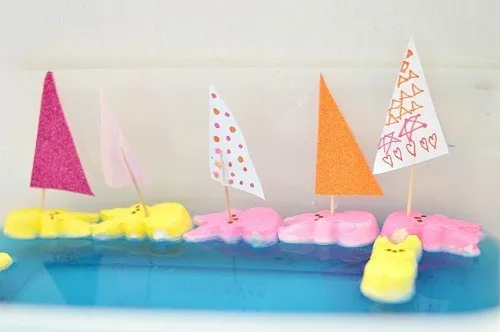
Turn marshmallow bunny Peeps into boats with toothpick sails, then float them in water. Experiment with sail materials, shapes and toothpick positions to explore floating, balance and wind.

⚠️ Safety first

  • Toothpicks are sharp. Supervise closely and help younger kids push them into the Peeps.
  • Marshmallows are a choking hazard for young children. Don't let kids eat the boats after they have been handled, pierced and soaked in water.
  • Always supervise water play.
  • If you use a table fan for the wind test, an adult runs it on a gentle setting and keeps fingers away from the blades.
  • Supervise kids who are using scissors to cut their own sails.

Before the kids arrive

  • Cut triangle sails from foam, card stock, printer paper, tissue paper and fabric, or let the kids cut and personalize their own.
  • Fill a bowl (for 2-3 Peeps) or a larger container (for lots of boats) with water. Tint it with blue food color if you like.

Steps

  1. Lay out your Peeps along with the supplies for making sails.

  2. Cut triangle sails from different materials and decorate them if you like.

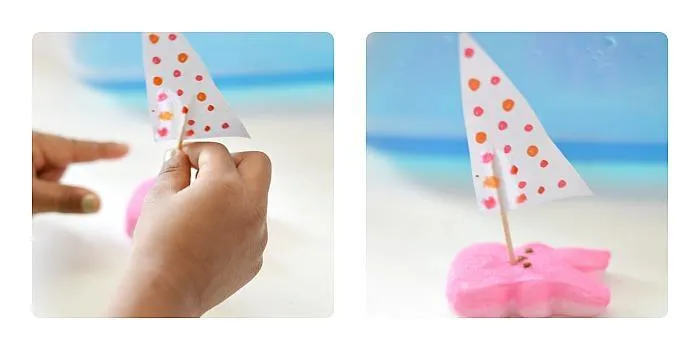
  3. Glue or tape each sail to a toothpick. Try the sail too high, too low and just right.

  4. Push the toothpick into the Peep. Try the middle near the belly, or the head.

  5. Make two boats, one with a paper sail and one with a foam sail, to see the difference.

  6. Place the boats gently in the water container.

  7. Watch your boats. Which ones float steadily, and which ones tip over?

  8. Swap sails or move the toothpick, then test again.

  9. Adult: gently blow air across the water with a table fan, and watch how the boats move.

Tips

  • While the foam was the most eye-catching, it made the boat heavier.from the author
  • Depending on the sail material, the center of mass may shift. For some Peeps a toothpick in the head makes the boat stable. For most it will be in the center, near the belly of the bunny. Explore!from the author
  • A bowl of water works if you're playing with 2-3 Peeps. We went to town and made plenty of boats, so we needed a larger container.from the author
  • Turn it into a science experiment by asking questions: Why does the peep float? Which sail makes the most stable boat, and why? Why do the sails have to be triangular? Does the toothpick's position matter? What's happening to the balance?from the author
  • Float or sink experiments are a fantastic starting point for exploring density and displacement. You can add center of mass, wind movement and lift too.from the author

Make it your own

  • Try different sail shapes, not just triangles.
  • Make felt or fabric sails.
  • Use a table fan to explore the effect of wind.
  • Tint the water blue with food color for a sea look.

The story behind it

By TurkeyMom · March 2015
Peeps Boats Experiment
First lay out your peeps along with the supplies needed to make the sails. Explore making sails with different materials: foam, card stock, regular white paper, fabric or tissue paper.
1 / 9

Peeps Boats Science Experiment: the original post

Turn those funny and adorable peeps into boats. Hands on science for kids in this fun Easter Activity for kids.

Alright folks, the peeps have hit the stores! Playing with marshmallows is fun. Here is a fun science project for Easter. People are going to start pounding the peeps, nuking them, cutting them and what not! I love peeps science and peeps experiments and generally all hands on science for kids. But we however are simply going to float our marshmallow peeps and make peeps boats.

Float or sink science experiments are great fun and a fantastic starting point for kids to start exploring density and displacement. Today’s post will give you an opportunity to combine those concepts as well as others if need be { center of mass, wind movement, lift}

Easter Activity For kids : Peeps Boats Experiment

First lay out your peeps along with supplies needed to make the sails
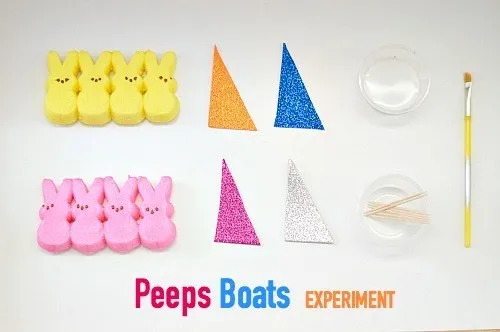
Peeps Boats Experiment

Foam sails, card stock paper sails, regular white paper sails, fabric sails, tissue paper sails. Explore making sails with different materials. The kids can even cut their own sails and personalize them. Then attach the sail to the toothpicks using glue or tape. The placement of the sail on the toothpick is up for exploration. Try different positions with your kids. { too high, too low, just right}
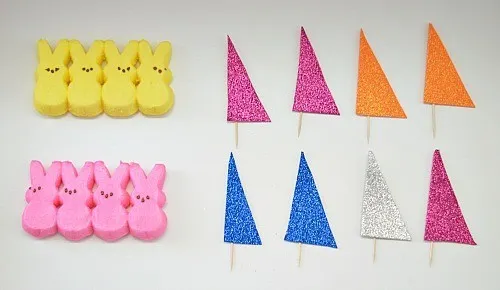
materials for peep science

Now time to make the peeps boat. Attach the toothpicks to the peeps. Again here the position of the toothpick on the marshmallow is up for exploration. Depending on the material used for the sail the center of mass may have shifted. For some peeps the toothpick’s position on the head makes the boat stable. For most it will be in the center near the belly of the bunny. Explore!
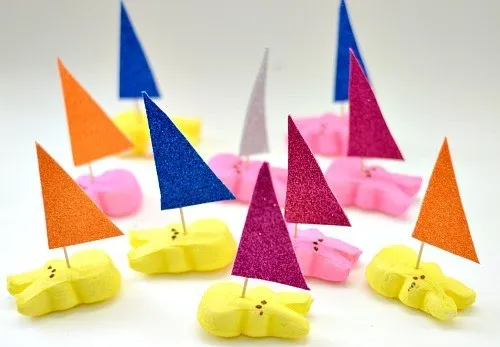
science with peeps

Time to set sailing. My 6 year made a few paper sails and tissue sails and got her peeps ready for the sailing action. try different sails At the heart of science is experimentation, and that’s exactly what we did in this hands on science project. She made 2 sails - one paper and one foam to see the difference. { You could do felt and fabric sails} marshmallo boats Place them in a bowl of water if playing with 2-3 peeps.
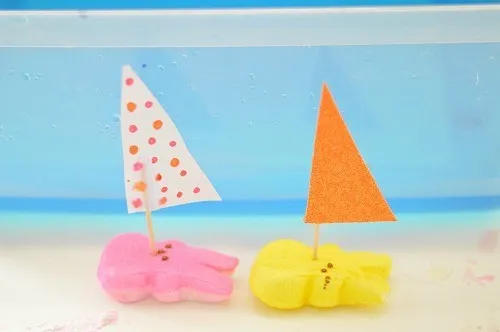
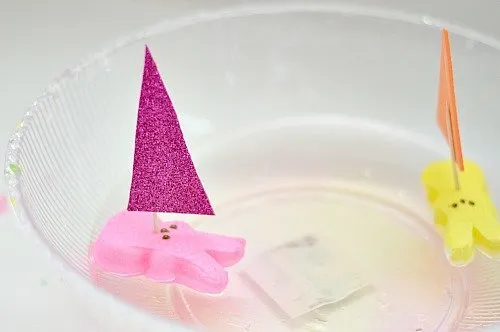
peeps experiment for floating

But we went to town in this science experiment and made plenty of peeps boats. We needed a larger container.
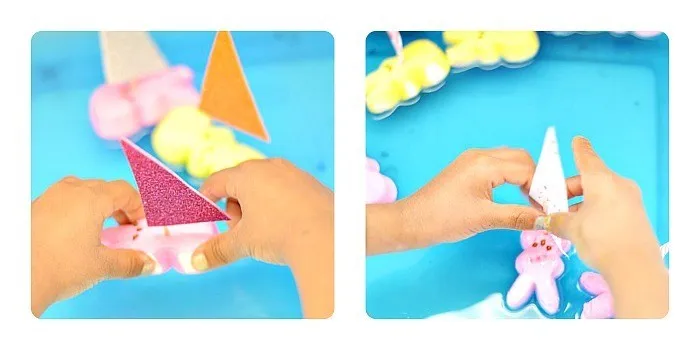
sail the peeps boats hands on science

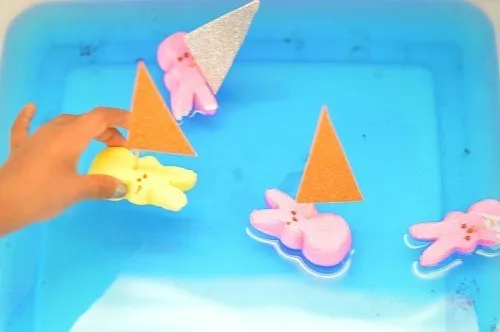
Place your boats gently in the water container and observe them.
easter activity for kids peeps boats peep boats for easter kids

How to turn this fun Easter Kids Activity into a fun science experiment

By asking questions! Start off with the basic ones 1. Why does the peep float? 2.Explore making sails from different materials The kids used regular white paper, card stock paper, tissue paper and sparkly foam. While the foam was the most eye-catching it made the boat heavier. 3. Which sail { paper, tissue, foam or even fabric} is the best choice for making the most stable boat? 4. Why? 5. Why do the sails have to be triangular? Try making different shaped sails 6. Does the position of the toothpick matter? Try placing the sail at different places 7. What’s happening to the balance ? 8. Explore the effect of wind Grab a table fan and gently blow air on the water

Thanks for reading

Check out Lemon Lime Adventure’s post on a fun Peeps Experiment

More Science for Kids on our category page

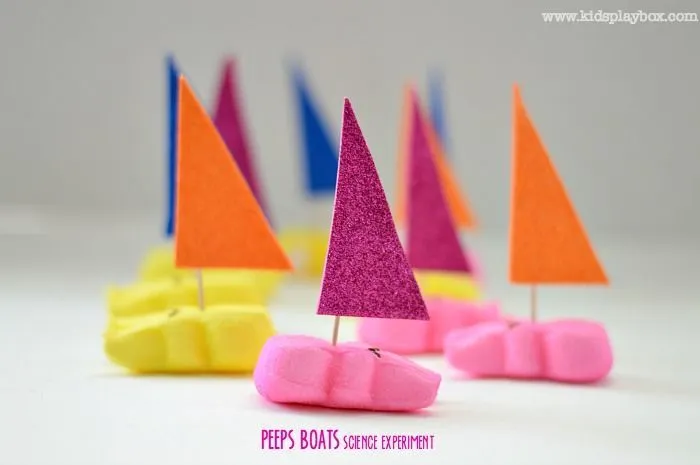
Here is your pin
What readers say

No comments yet. Be the first to tell us how it went.

Tried it?

Reviewed before it appears. No links, and please no children's names.

Similar activities

🛒 Materials